Anyone who separates their food waste from garbage at home can tell you one thing: their trash bags are lighter – and they need to be left curbside less often. Why is this?
Food scraps take up a heavy portion of our trash. In Westchester County, 22% of all waste comes from our food! And when left in our garbage, food scraps end up incinerated. Burning food takes more energy in the incinerator because of its high water content, which creates more air pollution in addition to producing ash that goes to a landfill. But it doesn’t have to be that way!
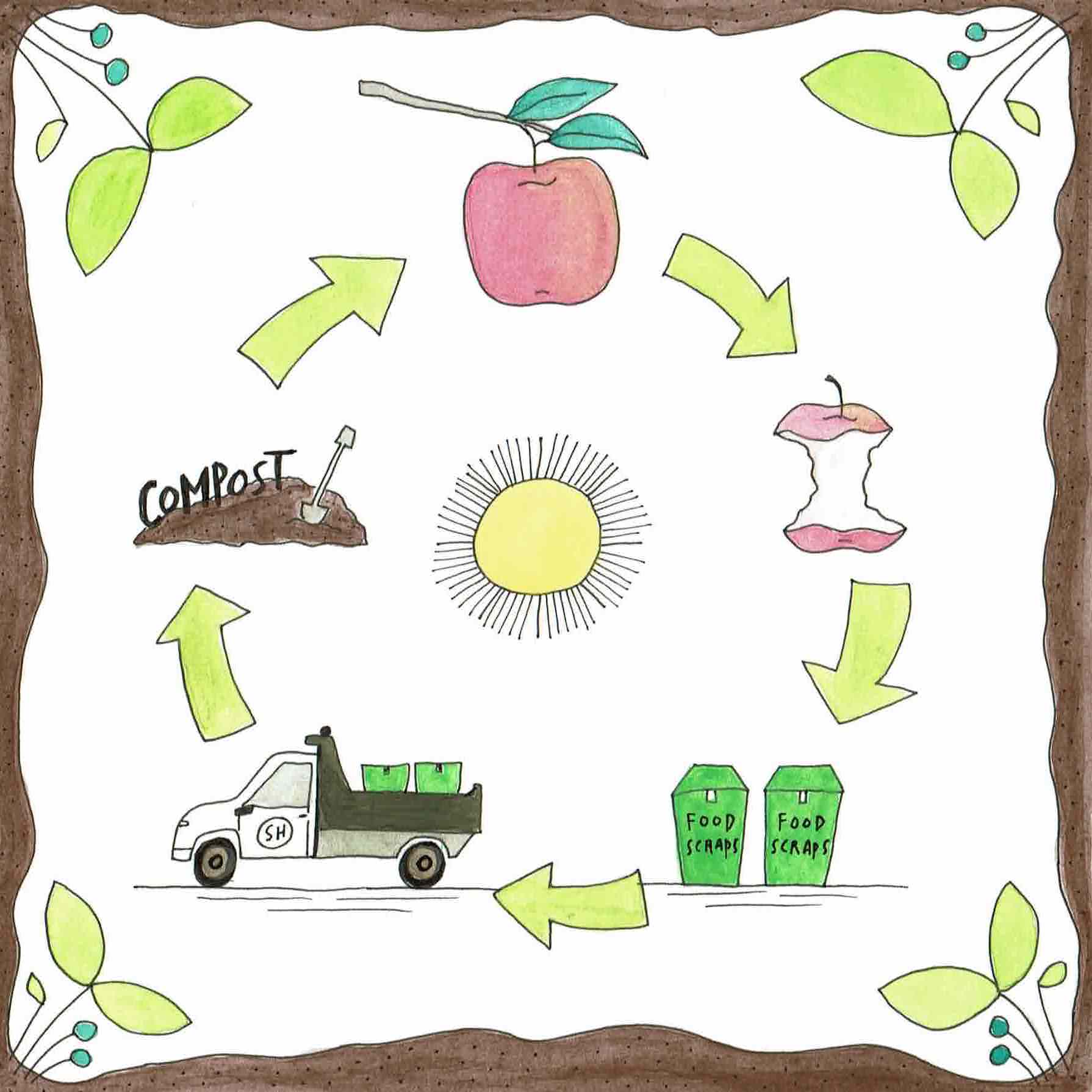
Just as we recycle our plastic bottles and paper to take them out of the waste stream, we can now turn food scraps into something new – a valuable soil amendment called compost.
Compost maximizes plant growth and improves soil health, in addition to reducing our carbon footprint (we get more into all the benefits of compost below!). So instead of throwing your food scraps into the trash, start composting your food scraps by:
- Picking up a compost bin (Village Hall has them on sale for $10)
- Separating food scraps into a separate container (or freeze them!)
- Dropping food waste off at one of Sleepy Hollow’s collection sites as often as you need to
- And if you have a backyard, you can also recycle food scraps at home – DIY compost!
The Village takes our community’s collected food scraps to a commercial composting facility, which facilitates its natural decomposition until it is reduced to beautiful, earthy goodness. And voila – this small change of habit will send less garbage to the incinerator and help Sleepy Hollow achieve our goal to reduce waste in the Village.
Trash isn’t something that makes people particularly happy – and it can be overwhelming to imagine where it ends up: either growing a landfill or burning in an incinerator. But you can make a difference in a major way.
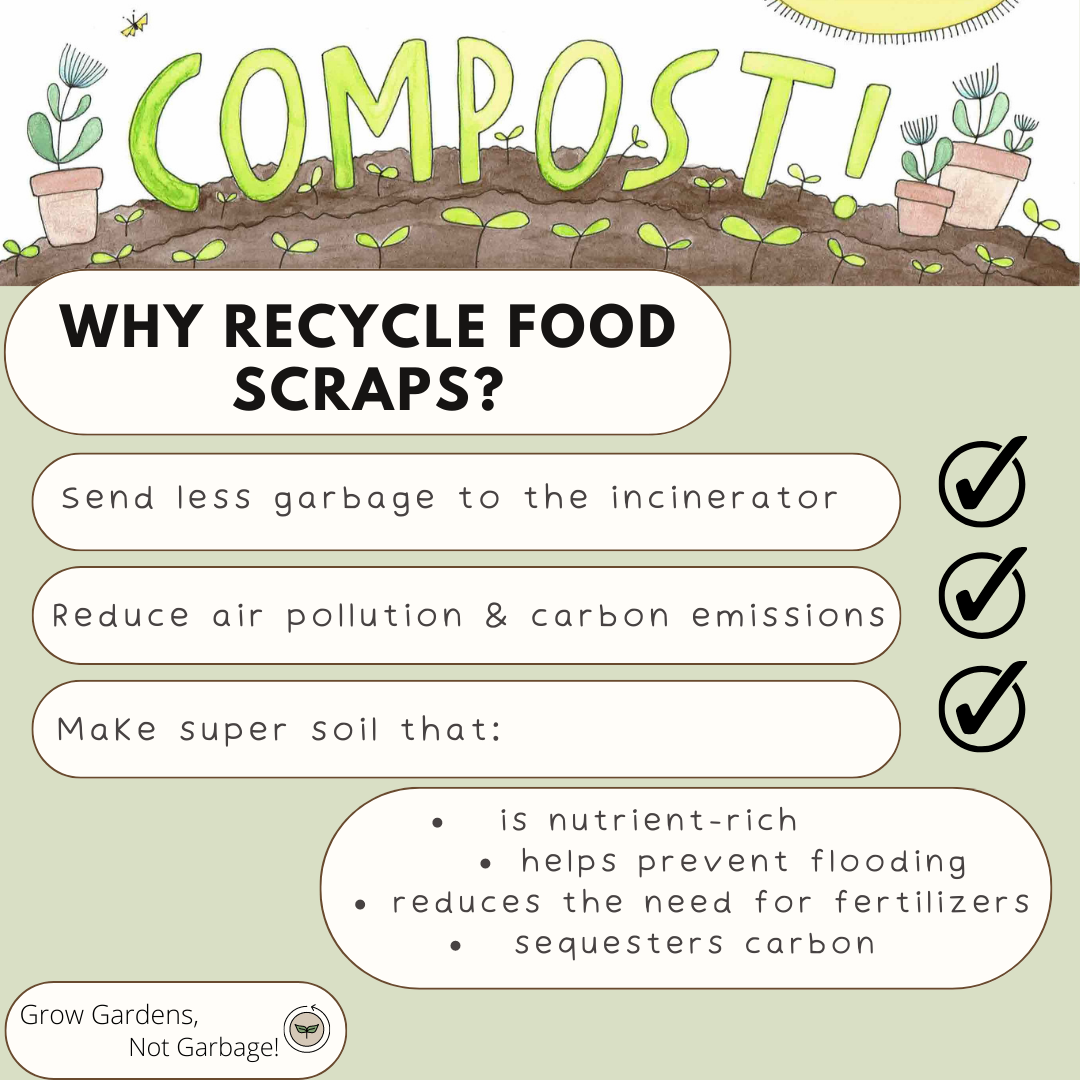
Recycling food scraps is a low-hanging fruit for reducing the amount of trash we generate. Food waste take up a large portion of our garbage, but when we compost it, we return their nutrients and energy to the environment.

What’s all the fuss about compost?
Compost is a type of organic matter made through the natural decomposition of biodegradable materials like food and yard waste. It is a dark, crumbly, nutrient-rich humus that improves gardening and agriculture in so many ways.
What are some of these benefits? Compost:
- Improves soil structure and health by adding organic matter
- Helps retain nutrients and moisture in soil
- Attracts beneficial organisms (decreasing the need for pesticides and fertilizers)
- Sequesters carbon in the soil
- Reduces the risk of soil erosion
- Builds resiliency to the impacts of climate change (like flooding)
That sounds a whole lot better than burning your leftovers! So create something new: start recycling your food waste to Grow Gardens, Not Garbage!
 Sustainable Sleepy Hollow